
Travelling to Umrah with children, elderly parents or a larger family group? Use these practical planning tips to make your journey more organised, comfortable and stress-free.
Performing Umrah with family can be a very meaningful experience, but travelling as a group requires more planning than travelling alone. Children, elderly parents and larger family groups can have different needs, so the best approach is to organise the important details before leaving the UK. A little preparation can make the journey much easier once you arrive in Saudi Arabia.
Start by deciding who is travelling and what each person needs. Consider ages, mobility, room requirements, dietary needs and how much walking everyone can comfortably manage. If elderly parents are travelling with you, their comfort should be considered when choosing hotels, transport and the daily schedule.
Accommodation is one of the most important decisions for a family Umrah trip. Families should check whether they need connecting rooms, larger rooms, triple rooms or a family arrangement. Do not assume that everyone will automatically be accommodated together simply because the booking is for one group. Confirm the room configuration before making the booking.
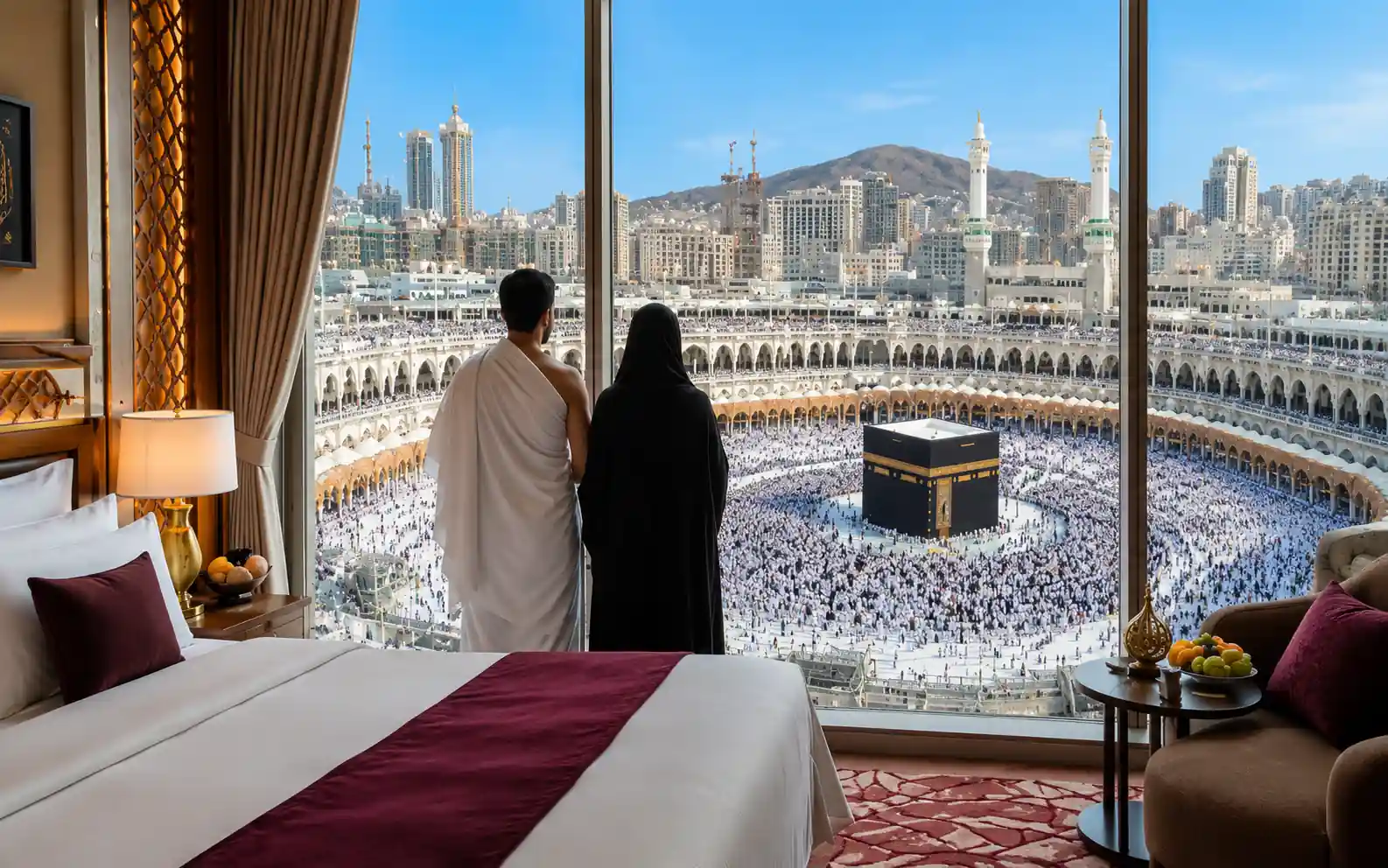
Hotel location is particularly important when travelling with children or elderly relatives. A hotel closer to the Haram can make it easier for family members to return for rest. If you choose a hotel farther away to save money, check the transport arrangements carefully and make sure they are suitable for the entire group.
Children may become tired during long days of walking and worship, so build regular rest periods into your plans. Avoid expecting young children to follow exactly the same routine as adults. Keeping snacks, water and essential items accessible can also make long journeys and waiting periods easier.
If you are travelling with very young children, consider what equipment you will realistically need. Depending on the child's age and your travel arrangements, a suitable stroller can make movement easier. Check the rules of your airline and any local restrictions before travelling with larger baby equipment.
Before leaving the UK, teach children basic information about the journey. Older children can learn the names of Makkah and Madinah, understand why the family is travelling and know what to do if they become separated. Young children should know their parents' names and have a simple way of identifying their family members.
Large groups should agree on a meeting point and communication plan. Mobile phones are useful, but batteries can run low and internet access may not always work as expected. Each family member who is old enough should know the hotel name and have the group's important contact details available.
It is also useful to prepare a simple daily routine. Instead of planning every hour, identify the important activities and leave enough time for rest. The combination of walking, crowds, prayer and travel can be tiring, especially for elderly travellers and young children.
Packing should be based on the needs of the entire family. Keep travel documents, booking confirmations, medication, essential toiletries and other important items easy to access. If someone in the group takes regular medication, make sure they have an adequate supply and keep relevant documentation where appropriate.
Parents should also think about food and hydration. Travelling, walking and spending long periods outside can make it easy for children to become tired or dehydrated. Carry suitable water and snacks when appropriate, and make sure children have opportunities to rest and eat during the day.
When booking flights, check baggage allowances for every traveller rather than assuming the same allowance applies to everyone. Airline baggage rules can vary depending on the ticket type. Knowing the allowance before packing can prevent unnecessary problems at the airport.
If your family itinerary includes both Makkah and Madinah, organise the transition between the two cities carefully. Keep luggage organised and make sure everyone knows when the group is leaving the hotel. Smaller bags containing essential items can be particularly useful during transfers.
Another useful tip is to avoid overloading your itinerary with sightseeing or additional travel. The main purpose of an Umrah journey is worship, so give your family enough time to rest and focus on the pilgrimage. A slower and more organised schedule is often easier than trying to fit too many activities into every day.
Families should also discuss the main rites of Umrah before travelling. Understanding the basic process can reduce confusion when you arrive. Each family member should learn what they need to do, while religious questions should be directed to a trusted and qualified Islamic scholar or reliable Islamic source.
Finally, remember that not everything will go exactly according to plan. Flights can be delayed, rooms can take time to become available and busy areas can make movement slower. Staying patient and keeping the schedule flexible can help your family deal with unexpected situations without unnecessary stress.
With the right preparation, travelling for Umrah as a family can become a memorable experience. Choose accommodation based on your group's needs, organise transport and documents in advance, allow plenty of time for rest and make sure everyone understands the basic plan. Good preparation allows the family to focus more on worship and spend less time dealing with avoidable logistical problems.